
HTTP Callout
HTTP Callout allows custom Vault Java SDK code to make HTTP requests to other Vaults, to Vault API, and even third-party systems. Because Spark Messages are lightweight, it is likely that messages will need to make HTTP callouts for additional data.
HTTP Callout allows you to automate business processes between Vaults. For example, a new change control record in Veeva QMS causes a trigger to fire which sends a Spark message to Veeva Registrations. This message starts a set of regulatory activities in Veeva Registrations, but it needs more information. With HTTP Callout, Veeva Registrations calls back to Veeva QMS for the necessary information about the change control.
See our sample code for more examples of HTTP callout.
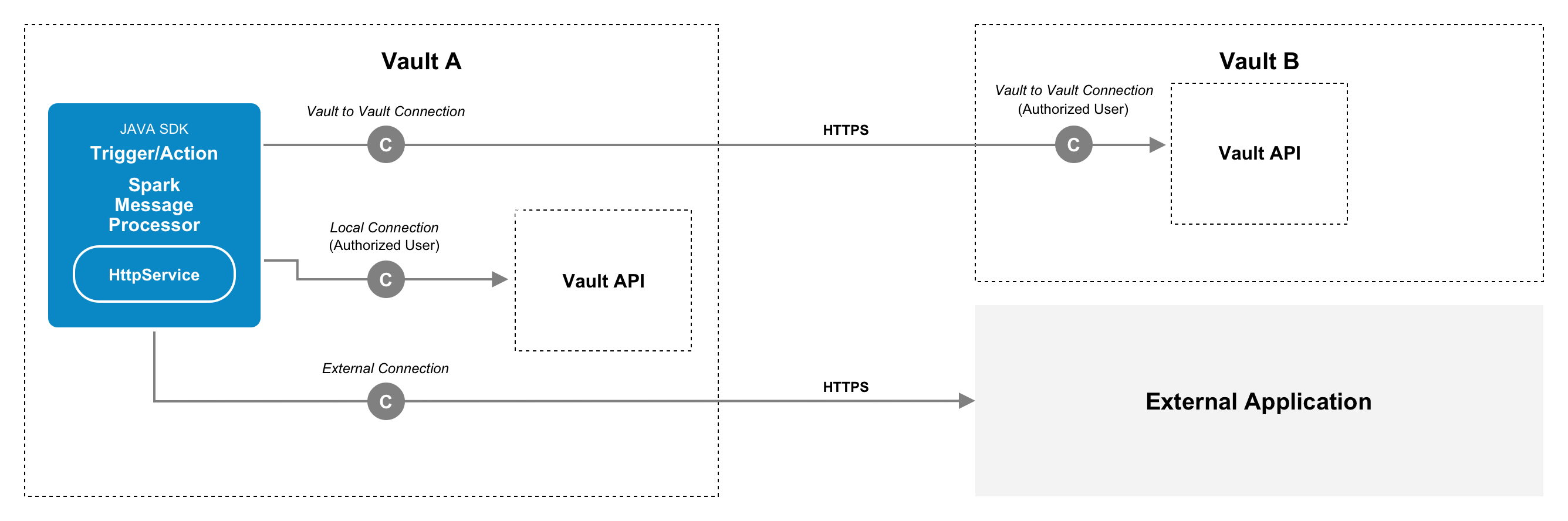
In the diagram above, a trigger or action in Vault A calls HttpService to make three HTTP Callout requests.
The first HTTP request is sent to Vault B through a Vault to Vault Connection. Once in Vault B, it requests information from Vault API through Vault B’s Authorized Connection User.
The second request goes through a Local Connection and calls Vault API with Vault A’s Authorized Connection User.
The third request is sent to an through an External Connection to an External Application. This application must provide resources for the request to obtain information.
In this section, you will learn: